Facilities teams that have run the same clear plastic umbrella bags for years are increasingly fielding a new question from tenants and sustainability managers: can we switch to something compostable? The pressure comes from corporate environmental targets, expectations in higher-end buildings, and the slow tightening of single-use plastic rules in many cities. Compostable wet umbrella bags do exist and they work, but they are not a drop-in swap. The film behaves differently, the price is meaningfully higher, and the environmental payoff only shows up under specific disposal conditions. Here is what separates a compostable bag from a conventional one, and how to judge whether the change is worth it at your entrance.
What a compostable umbrella bag is actually made of
A conventional wet umbrella bag is polyethylene, usually LDPE or LLDPE, extruded into a thin clear sleeve somewhere between 0.7 and 1 mil thick. Compostable bags replace that petroleum film with a blend of bio-based and biodegradable polymers. The common recipe combines PLA (polylactic acid, generally made from corn or sugarcane starch), PBAT (a flexible biodegradable polyester), and sometimes raw corn starch as a filler. PLA on its own is stiff and brittle, so the PBAT is what gives the bag enough stretch and tear resistance to feed through a dispensing stand without splitting when someone yanks it.
The word that carries weight here is compostable, not biodegradable. In practice “biodegradable” means very little on its own, because almost anything breaks down eventually and the term is not tied to a timeframe or a set of conditions. Compostable is a defined claim. In the United States the relevant standard is ASTM D6400, and third-party certification through BPI (the Biodegradable Products Institute) or the European OK Compost mark confirms a bag has been tested against it. Those marks mean the film will break down in a commercial composting facility within a set period without leaving toxic residue. Be wary of “oxo-degradable” products, which simply fragment plastic into smaller pieces and are not accepted by most composters or certification bodies.
How much more compostable bags cost
Cost is usually the deciding factor, so it helps to see the gap plainly. Standard polyethylene umbrella bags are inexpensive: published list pricing for a case of 1,000 long bags (7 by 35 inches) sits around $50, and the thinner 0.7-mil bags run a little less. Compostable bags are a different economic tier. Because the resin is more expensive and production runs are smaller, they are usually sold by quote rather than off a price list, and buyers should plan for something in the range of two-and-a-half to three-and-a-half times the cost of plastic. The figure in the chart below is an indicative estimate, not a quoted price, but it captures the order of magnitude you should budget for.
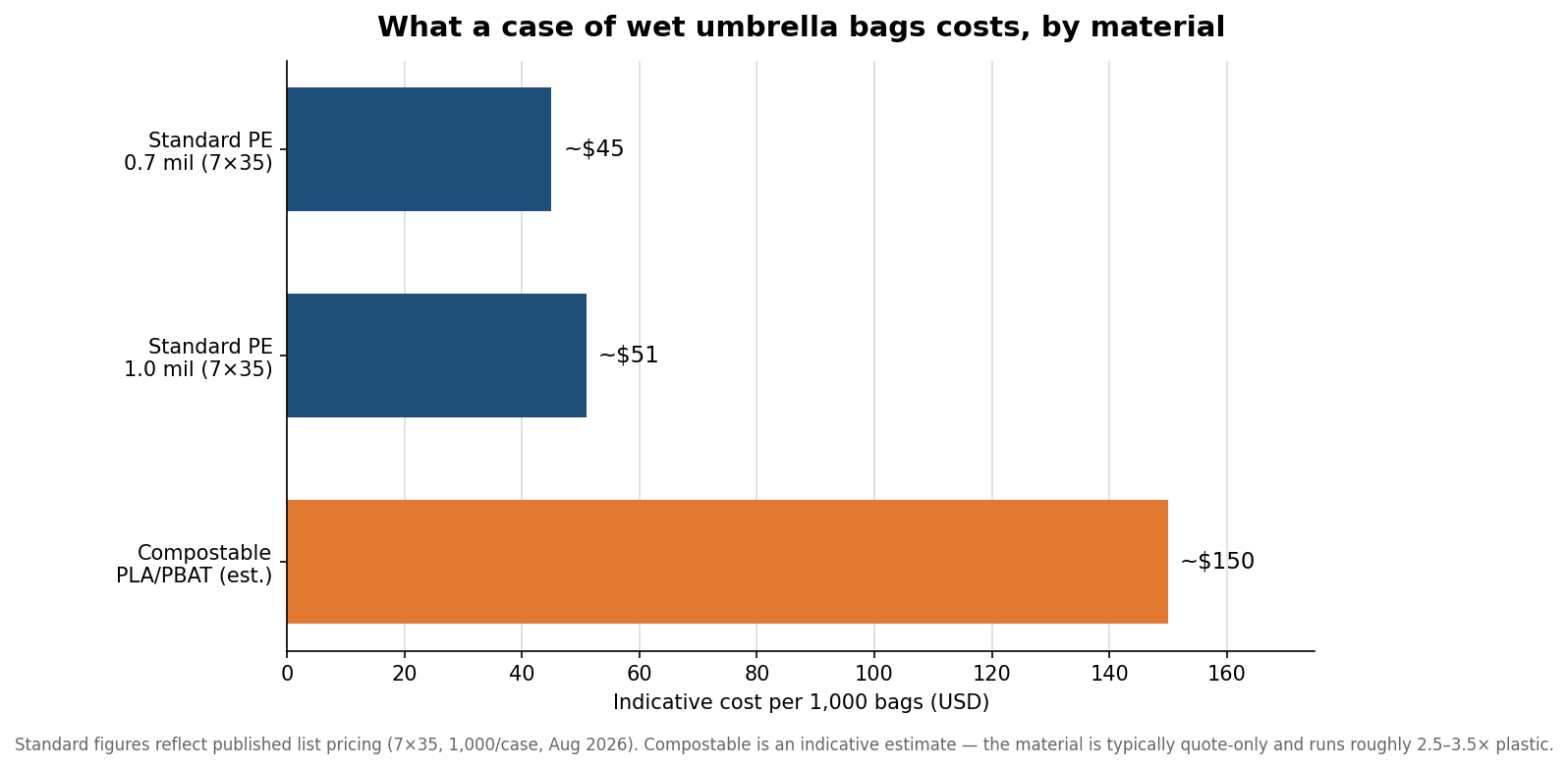
That premium is per bag, and umbrella bags are a high-turnover consumable during wet months, so the annual difference can be substantial for a busy entrance. It is worth pricing the switch against your actual usage before committing, rather than assuming a small unit difference stays small at volume.
Getting the size and stand right
Whichever material you choose, the bag only works if it matches your umbrellas and your dispenser. Two sizes cover almost every case. The short bag, roughly 7 by 24 inches, is built for compact and travel umbrellas that close down short. The long bag, roughly 7 by 35 inches, is built for full-length stick umbrellas and golf umbrellas. The width is consistent at about 7 inches across both, so the difference that matters is length. Guessing wrong is a common ordering mistake: order short bags for a downtown office and half your visitors with full-size umbrellas will not be able to use them.
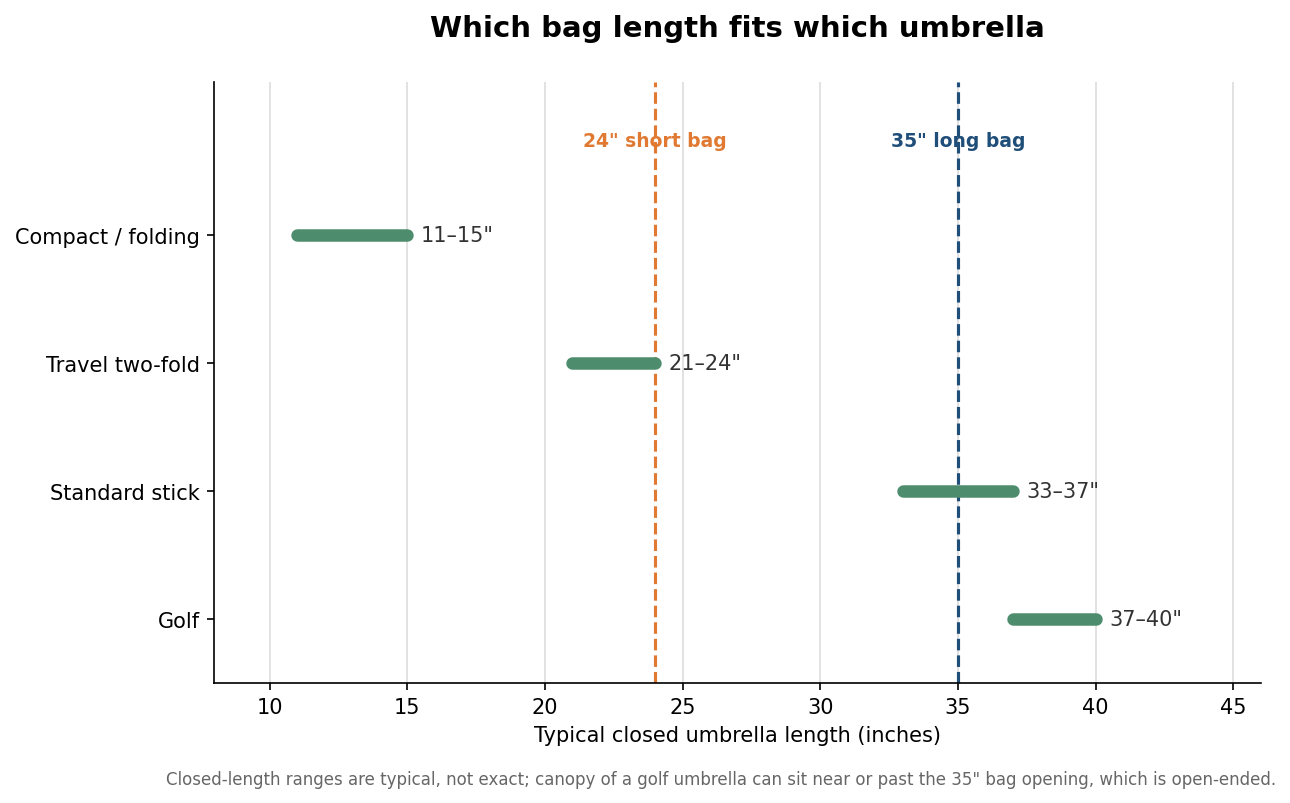
Stands matter too. Long bags are typically loaded onto floor-standing single-loop dispensers that hold the bag open so a person can push the closed umbrella straight down into it. Short bags suit smaller compact or wall-mounted dispensers. Most bags use a universal header strip that fits the common stand brands, but if you already own dispensers it is worth confirming the header style before you order a pallet of refills.
When compostable bags actually make sense
The honest answer is that a compostable bag only delivers its benefit if it reaches a commercial composting facility. Sent to landfill, it behaves much like any other plastic, breaking down slowly in the absence of oxygen and heat, and it cannot go in most curbside recycling because it contaminates the polyethylene stream. So the material makes the most sense for organizations that already run commercial composting or organics collection, or that are willing to treat the higher cost as a visible sustainability commitment regardless of the end-of-life path. For a building with no composting access and a tight consumables budget, a thinner standard bag or, better, a reusable dryer-style umbrella wrapper may be the more genuinely responsible choice. There is no universal right answer; it depends on your waste infrastructure and what you are trying to accomplish.
Specifying an order without waste
Whatever you land on, estimate volume before you buy. A rough planning method is to count entries on a wet day and multiply by the number of rainy days you expect in a season, then add a buffer for the fact that people often take a fresh bag on the way out as well. Bags ship in cases of 100 for low-traffic sites and 1,000 for busy ones, and buying the larger case lowers the per-bag cost noticeably. If you want your logo on the bag, custom printing is usually offered in one or two colors and adds lead time, so order seasonal stock several weeks ahead rather than the week the forecast turns. Reordering the same size and header you validated the first time keeps the dispensers you own working and avoids the waste of a mismatched pallet sitting in a storeroom.
Compostable umbrella bags are a reasonable upgrade for the right site, but they are a considered purchase rather than an automatic one. Match the size to your umbrellas, confirm the stand, price the material against real usage, and be clear-eyed about where the bag ends up after it leaves the entrance.